

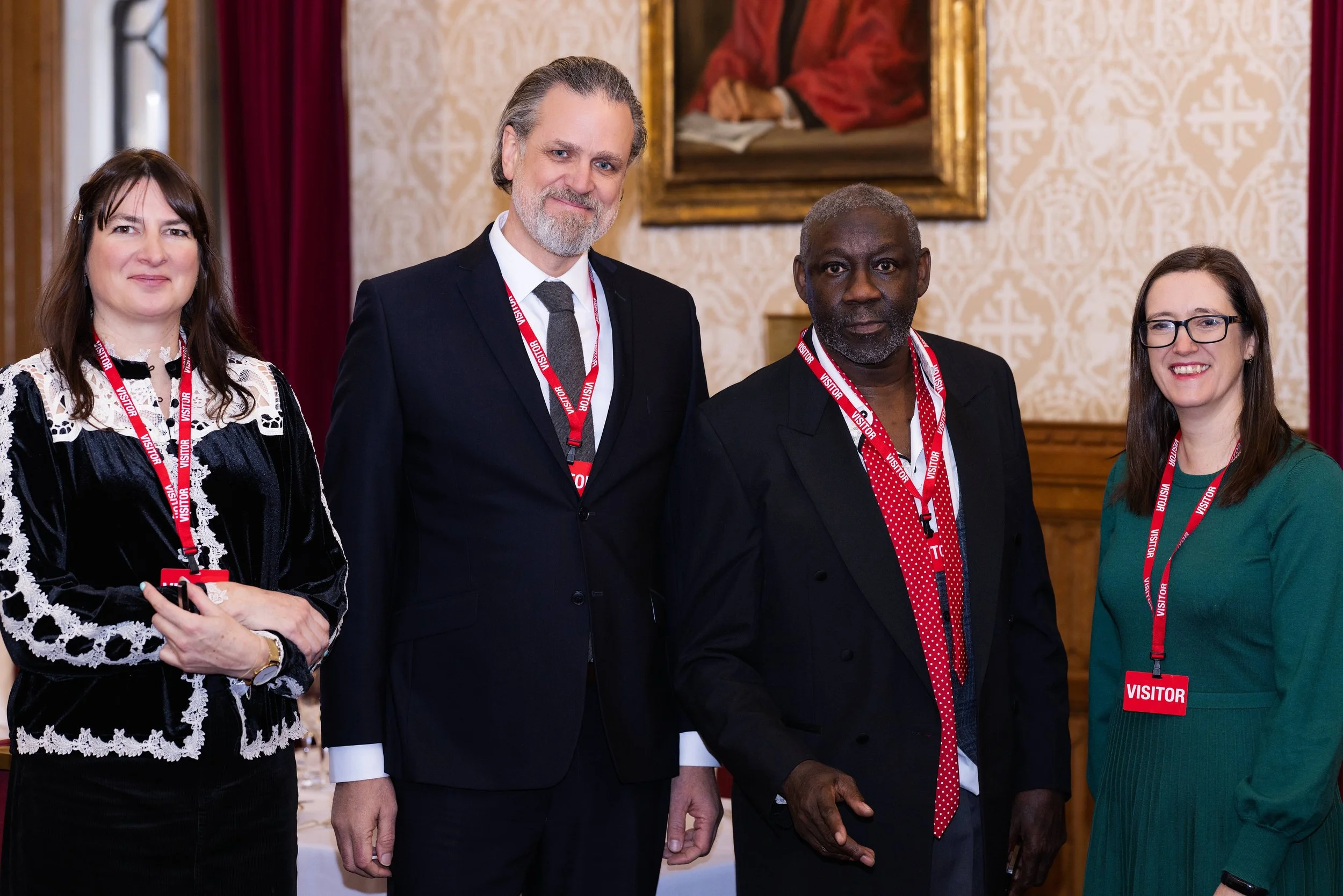
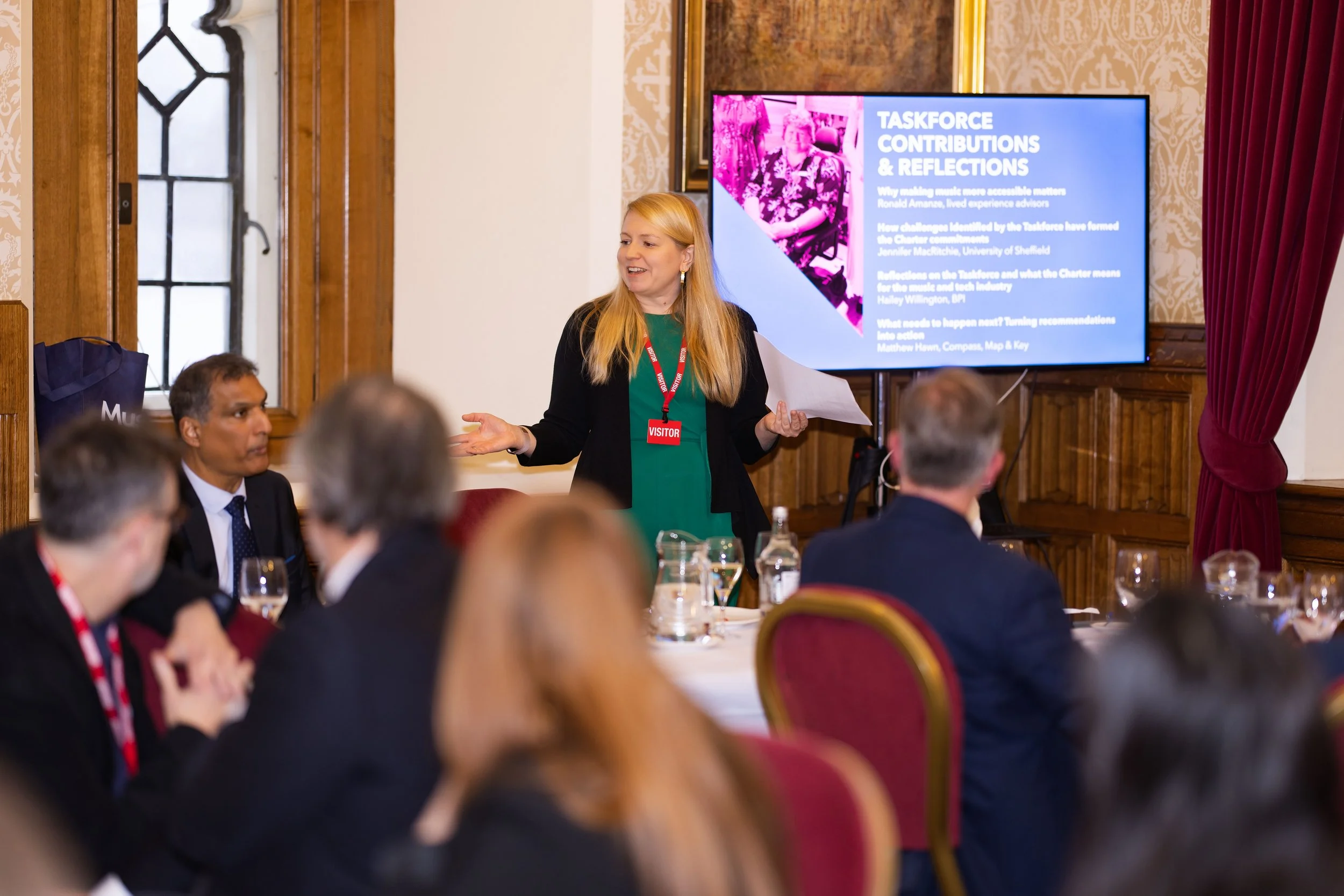
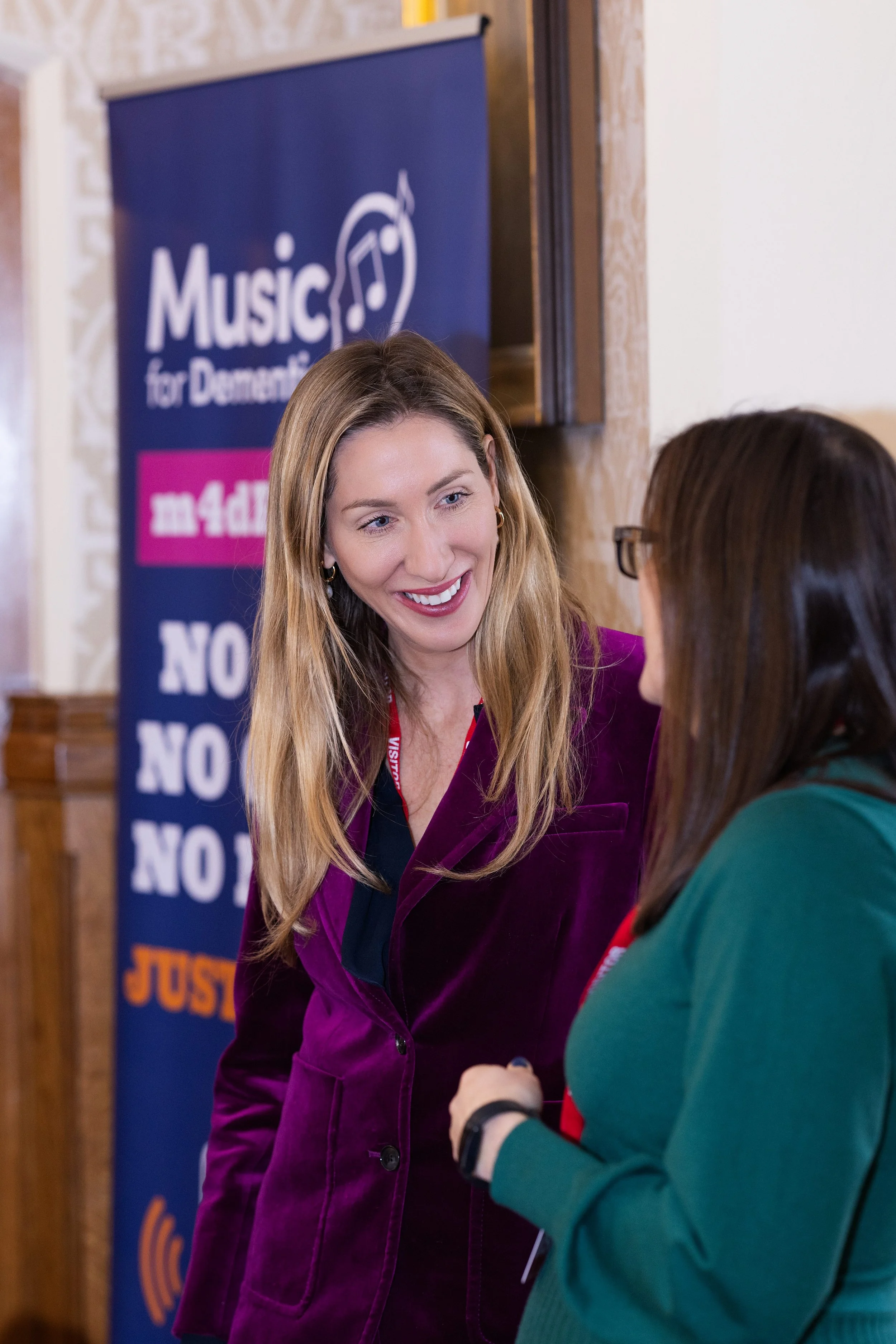
Image: Music Made Easy Charter launch attendees at the House of Lords.
Universal Music Group, Warner Music Group and the BPI join researchers, technology innovators and dementia campaigners in a shared commitment to breaking down the barriers preventing people living with dementia from accessing the music they love.
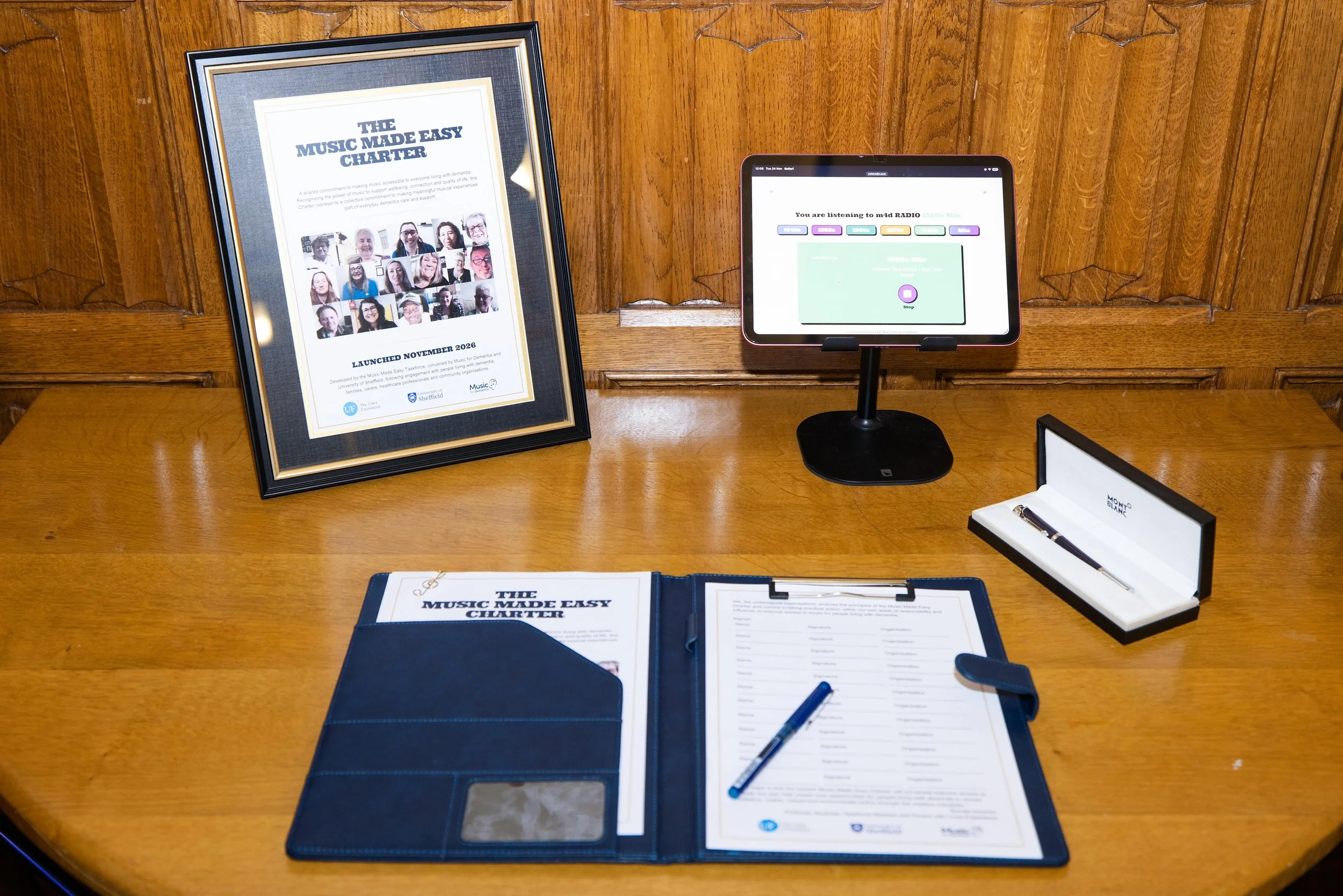
On Tuesday 24 November 2026, Music for Dementia and the University of Sheffield launched the Music Made Easy Charter at the House of Lords, marking a significant milestone in our campaign to make music more accessible to people living with dementia.
The launch brought together some of the world's biggest music companies, technology innovators, researchers and people with lived experience of dementia, united by a shared ambition to drive meaningful change.
Organisations supporting the initiative include Universal Music Group, Warner Music Group, the British Phonographic Industry (BPI), the Entertainment Retailers Association (ERA), Yoto and music technology company MediMusic.
Why Music Made Easy matters
Hundreds of thousands of people living with dementia are being locked out of the music that can help unlock memories, reduce distress and reconnect them with loved ones because modern streaming platforms and devices are too complex to use.
Whilst streaming has revolutionised how we listen to music, complicated apps, passwords, subscription services and difficult-to-use devices have created unintended barriers for many of the people who stand to benefit most.
Research from Music for Dementia and Age UK highlights the scale of this digital exclusion:
Only 3 in 10 older family carers are able to stream music with their loved one.
6 in 10 internet users aged 65 and over never use the internet to stream music or video.
With 940,000 people living with dementia in the UK, a figure projected to rise to 1.5 million by 2040, the need for accessible solutions is growing.
Evidence shows that familiar music can help alleviate agitation and distress, evoke memories, reinforce a sense of identity and reconnect people living with dementia with their loved ones.
Accessing these benefits should not depend on someone's ability to navigate modern technology.
Turning industry commitments into meaningful action
The launch of the Charter follows a year of collaboration through the Music Made Easy Taskforce, convened by Music for Dementia and the University of Sheffield's Muses, Mind, Machine research centre.
The Charter calls on the music and technology industries to help remove the barriers preventing people living with dementia from enjoying personalised music.
Signatories have committed to supporting the Charter's principles and taking meaningful steps within their areas of influence, with each organisation invited to share at least one action taken within 12 months.
These actions could include:
Developing simpler, more accessible music-playing technology.
Co-designing products and services with people living with dementia.
Improving awareness of the barriers to accessing music.
Working with rights holders and streaming platforms to simplify licensing and account arrangements in care settings.
Amy Shackleton, CEO of Music for Dementia, whose grandparents lived with dementia, said:
“For too many people living with dementia, barriers to accessing music mean they miss out on something that could make a real difference to their everyday lives.
“Over the past year, we’ve brought together influential organisations from across the music industry, technology, health and social care, united by a shared ambition to break down those barriers and make music more accessible to people living with dementia.
“Signing the Charter is an important milestone, but it’s also the beginning of the next chapter. Crucially, this Charter has been shaped by the voices and lived experiences of people with dementia themselves.
“We now have an opportunity and a responsibility to turn our shared commitments into meaningful action, so that more people can experience the joy and connection that music brings.”
Lord Syed Kamall, who hosted the House of Lords reception, said:
“Music has an extraordinary ability to connect people, evoke memories and enhance wellbeing, particularly for those living with dementia.
“I’m delighted to have hosted the Music Made Easy Taskforce at the House of Lords to mark the signing of this important Charter. It’s an encouraging step forward to see leading organisations across these sectors commit to meaningful action.”
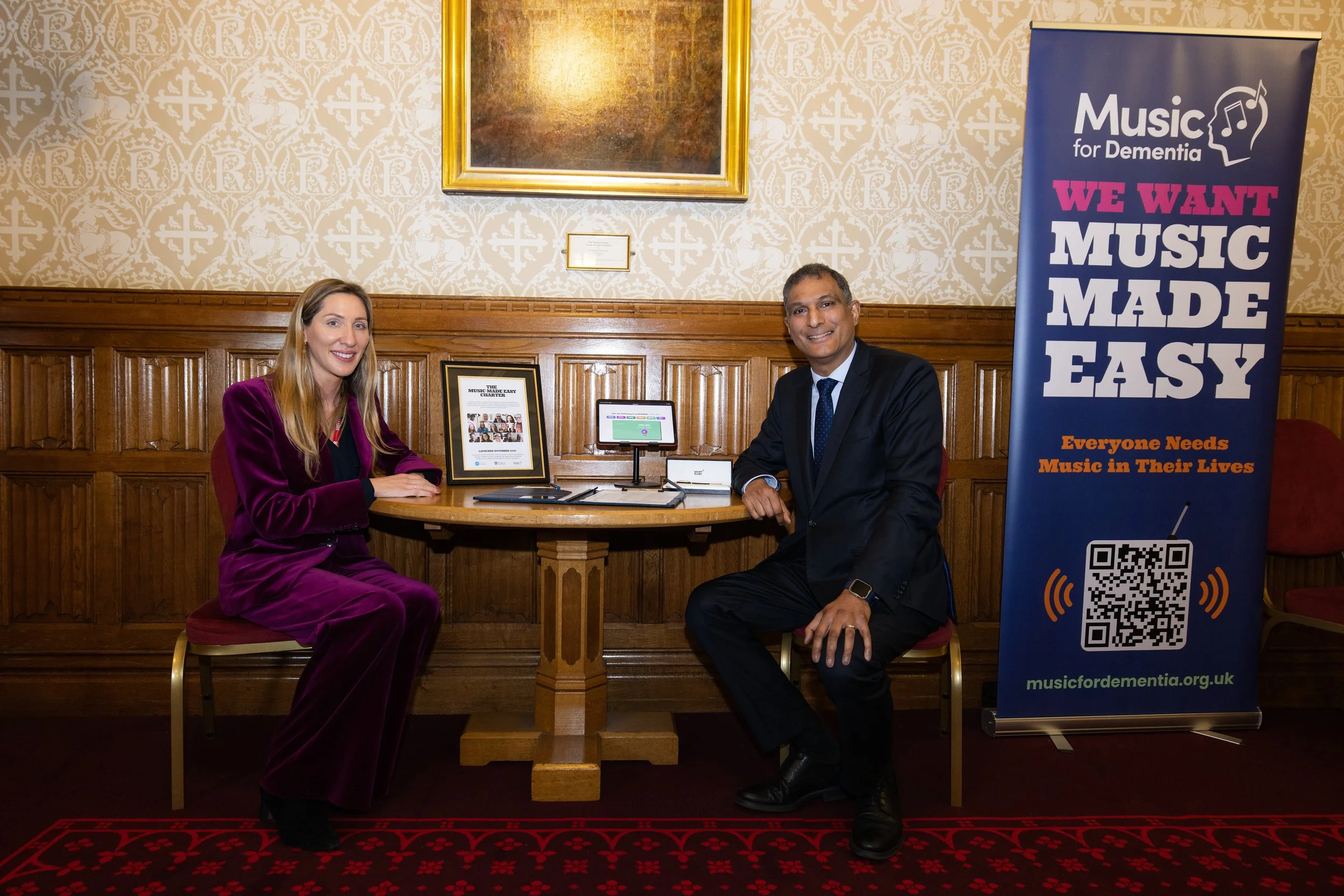
Image: Music for Dementia CEO Amy Shackleton and Lord Syed Kamall at the Charter signing at the House of Lords.
Putting lived experience at the heart of change
Central to the work of the Music Made Easy Taskforce is ensuring that people living with dementia are actively involved in shaping the products, services and solutions designed to support them.
The Charter is underpinned by research from the University of Sheffield's Muses, Mind, Machine research centre and the EPSRC-funded BRIDGES for Dementia Network.
Led by Dr Jennifer MacRitchie, researchers are working directly alongside people living with dementia to co-design musical technology, from simplified playback devices to intuitive tools that enable people experiencing cognitive decline to improvise and create new music.
Howard Gordon, Advisor from the BRIDGES for Dementia Network and Co-Chair of Deepness Dementia Media Ltd, said:
“True co-production starts with a plain piece of paper. People living with dementia should drive the design of new products from the start. They know what is needed better than anyone. They are rights holders and human beings and shouldn’t be defined by their diagnosis.”
Ronald Amanze, producer, musician, Taskforce member and a person with lived experience of dementia, said:
“My hope is that the Music Made Easy Charter will not simply improve access to music but also help create new opportunities for people living with dementia to remain creative, visible, valued and economically active through the creative industries.”
Earlier in the day, Ronald joined our CEO, Amy Shackleton, on BBC Radio 4’s Today programme to discuss the importance of the Charter and the challenges people living with dementia face when accessing music.
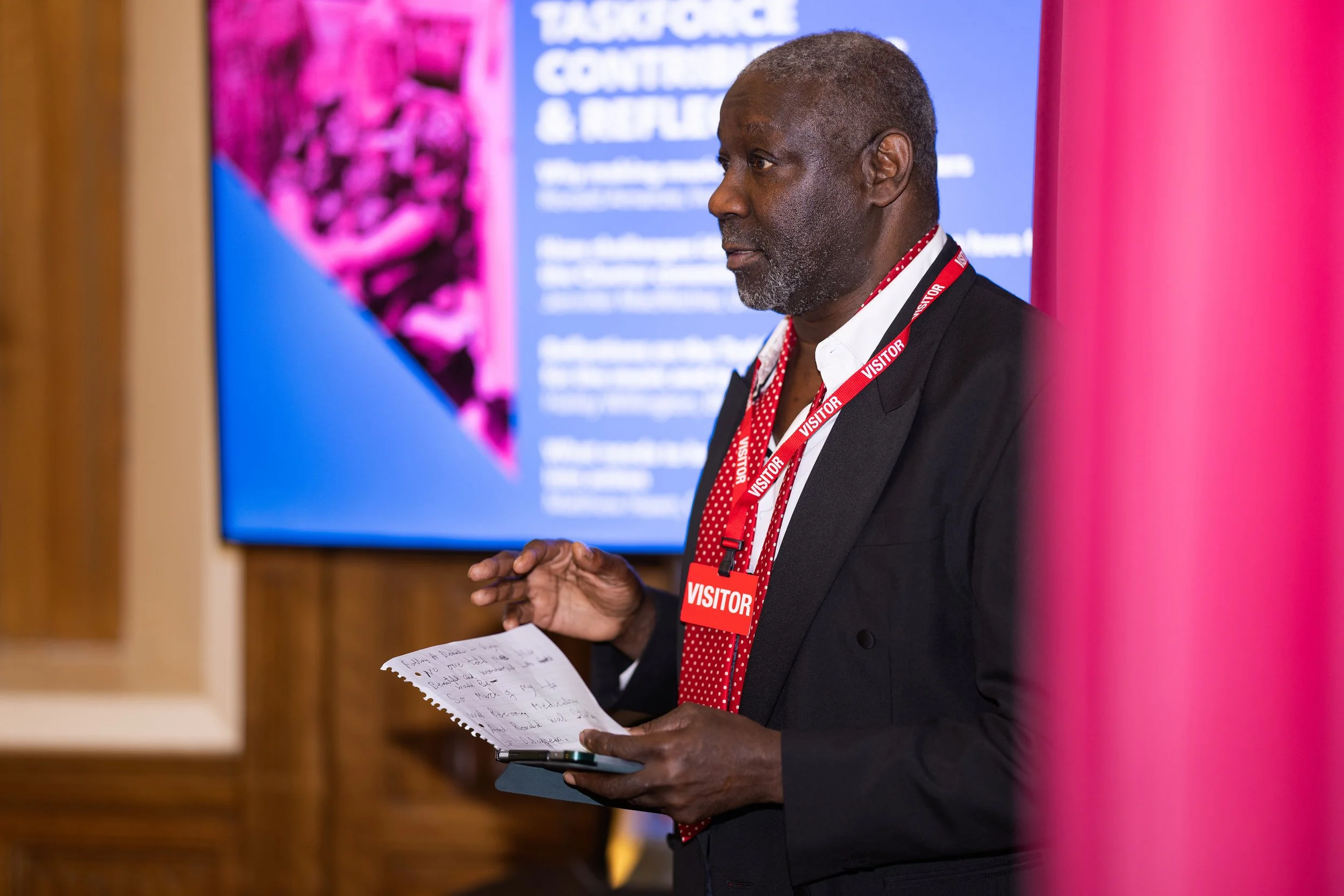
Image: Ronald Amanze speaking at the Charter signing at the House of Lords.
Bringing the music industry together
The Music Made Easy Taskforce brings together expertise from across the music, technology, research, health and social care sectors.
Hailey Willington, Head of Diversity, Equity and Inclusion at the BPI, said during the formation of the Taskforce:
“Music should be accessible to all, and by working together, we can redefine what accessible music technology looks like and ensure that it can serve everyone, not just digital natives.”
Karim Fanous, Director, Innovation and New Digital Business, Global Digital Strategy at Universal Music Group, previously said:
“Music for wellness and health is a vital area in our search for startups and support of entrepreneurial innovation that might add value to music and society. Music for Dementia and the University of Sheffield are initiating an important multi-stakeholder project which we will be honoured to support alongside UMG Health and Wellness.”
Making music easier to access today
At Music for Dementia, we are already working to make music more accessible through m4dRADIO, our free radio station designed specifically for people living with dementia and those who support them.
Featuring music grouped by decade from the 1940s to the 1980s, m4dRADIO offers an easy way to enjoy familiar songs that can spark memories, lift moods and encourage connection.
With no adverts, news or spoken interruptions, listeners can enjoy uninterrupted music for free, 24 hours a day.
Our dedicated MIX channel also features themed playlists for group listening and activities, helping care staff embed music into everyday care.
In a recent trial conducted by Music for Dementia, 92% of participating families said they would recommend screen-free music devices for older adults, further highlighting the importance of simple, accessible technology.
Meet the Music Made Easy Taskforce
We are grateful to all our Taskforce members for their expertise, commitment and contributions to this work:
Boomer + Beyond Research
BPI (British Phonographic Industry)
Compass, Map and Key
Entertainment Retailers Association (ERA)
Lived Experience Advisors
MediMusic
Miquido
Music for Dementia
Soule/Tinker
Universal Music Group
University of Sheffield (Muses, Mind, Machine)
Warner Music Group
Yoto
Join us in making music more accessible
The signing of the Music Made Easy Charter is an important milestone, but it is only the beginning.
We are inviting record labels, digital streaming platforms, publishers, hardware manufacturers, live event promoters and music technology companies across the UK and beyond to support the Charter and help turn our shared ambition into meaningful action.
Together, we can create a future where people living with dementia can continue to enjoy the music they love, without unnecessary barriers.
Read the Music Made Easy Charter and find out how to get involved
Research references: Music for Dementia online survey of 1,000 family carers (August 2024) and Age UK's Facts and Figures About Digital Inclusion and Older People (June 2024).
For media enquiries, please contact Lizzie Hoskin at lizzie-h@musicfordementia.org.uk.