
Music Made Easy Taskforce gathers at BBC
to turn accessibility talk into collective music and tech industry action! Taskforce moves towards shared design principles and a unified industry voice on music accessibility
LONDON – March 2026 – The Music Made Easy Taskforce convened for its second industry roundtable last week at the BBC’s state-of-the-art Blue Room, a specialist consumer technology research and demonstration lab at Broadcasting House in London.
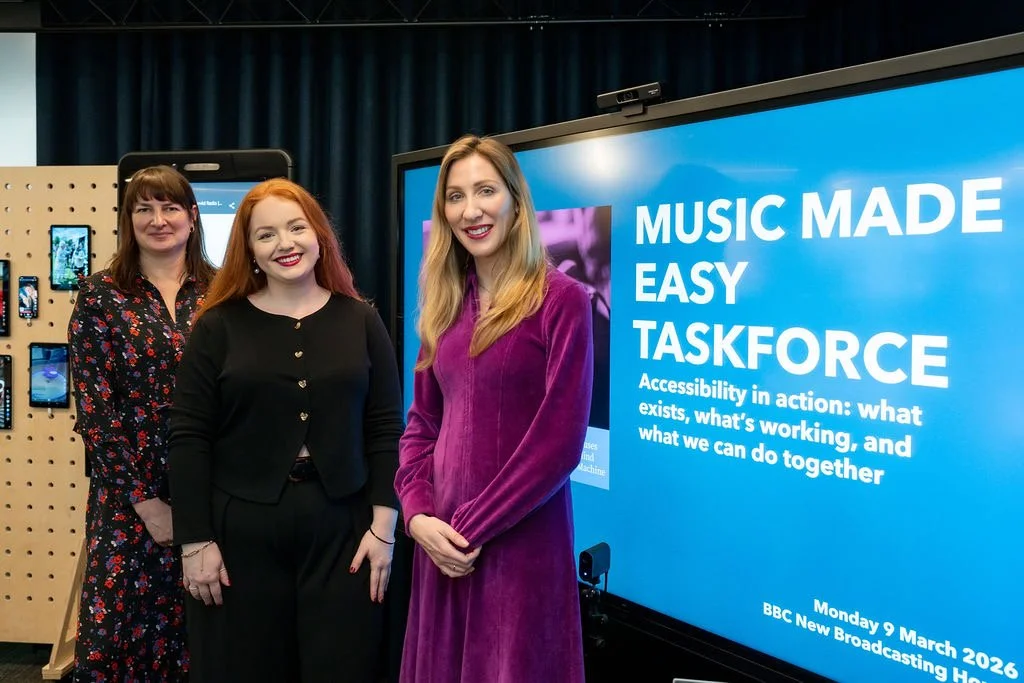
Organised in collaboration with Music for Dementia and the Muses, Mind, Machine (MMM) research centre at the University of Sheffield the event brought together 25 senior representatives from record labels, music licensing, technology manufacturers, broadcasters, accessibility specialists and dementia sector leaders to move from siloed projects towards collaboration: shared principles, collective action and scalable solutions that make music more accessible for people living with dementia and their carers.
The day opened with a BBC R&D showcase from Alison Hunter, Senior Technology Demonstrator at the BBC, introducing delegates to the Blue Room and the BBC’s wider research and development work around accessibility, audio and audience experience. Mark Punter, Senior Archivist and Presenter at BBC Memory Radio, then shared how archive radio content can support reminiscence for listeners with memory loss.
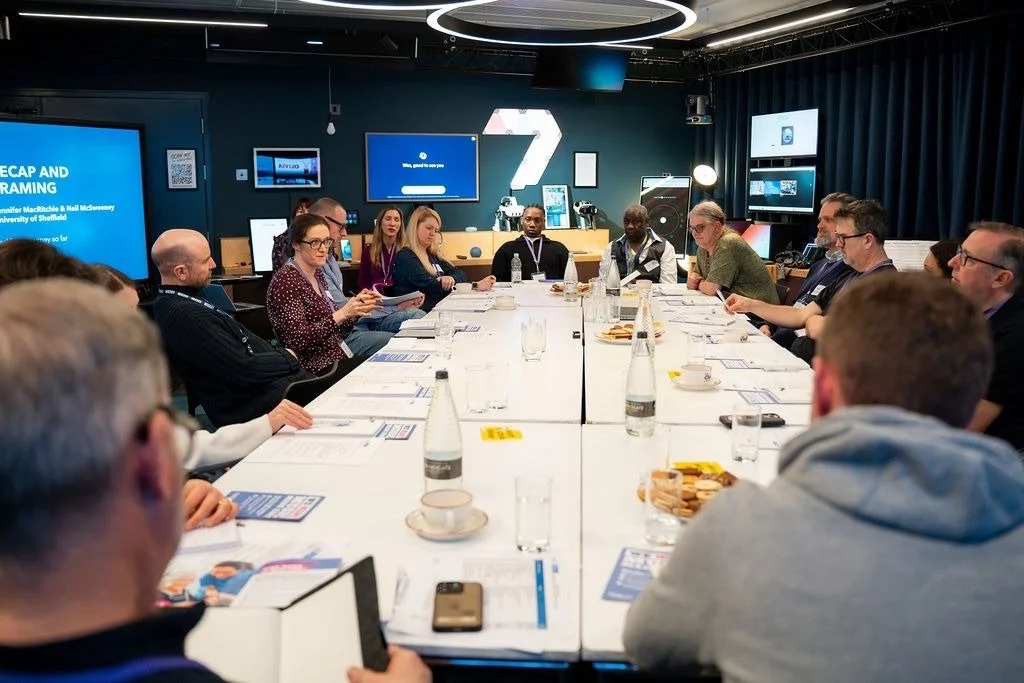
The event was then split across four sessions, exploring what already exists, barriers and enabler mapping, followed by group discussions on how the Music Made Easy Taskforce should help the sector coordinate the move from individual pilots to making real long-term change. Members proposed working towards a set of inclusive design principles for music access, co-produced with people living with dementia, that could be shared industry-wide to inspire accessible product design. The group also recognised the value of speaking with a single, unified voice on music accessibility, noting that a coordinated industry message will carry greater weight with decision-makers across technology, rights-holders and policy. Two Taskforce members with lived experience of dementia, Howard Gordon and Ronald Amanze, helped anchor and shape the discussions. The group also agreed on the importance of involving more people with lived experience of caring – whether in healthcare settings or at home – in future meetings, something members were keen to take forward. Amy Shackleton, Programme Lead at Music for Dementia, said: “This second roundtable event felt like a positive move forward for the Music Made Easy Taskforce. Our discussion has moved beyond understanding the scale of the accessibility challenge to thinking about what role we can collectively play to help overcome them. I’m really encouraged by the collective commitment from taskforce members, and excited to see what we build together over the next year.” Linda Walker, Music Industry Consultant & Task Force Member said: “It’s inspiring to be in a room with people who truly believe in the power of music and are passionate about exploring how it can be used for good. Collaborating with organisations like Music for Dementia makes this work deeply meaningful. Howard and Ronald’s moving contributions, sharing their lived experience of dementia, brought the importance of this work powerfully to life.” The next Music Made Easy Taskforce event will be in July.
For further media information or to set up interviews please contact Paula Hunter or Sam Jones at Big Bang PR on paula@bigbangpr.co.uk 07739 989915 or sam@bigbangpr.co.uk 07531 625233. About Music for Dementia: The Music for Dementia campaign is a charitable programme of the Utley Foundation, working to make music an integral part of dementia care. It involves more than 200 organisations from the NHS, care sector, third sector and music sector plus thousands of individual supporters, many with lived experience.
About the Utley Foundation: The Utley Foundation is a private charitable trust established by Neil Utley in 2014. The Utley Foundation established the Music for Dementia campaign in 2018 as part of its ambition to ensure music is made an integral part of care for all those living with dementia.
About Muses, Mind, Machine (MMM): Muses, Mind, Machine is a research centre at the University of Sheffield which focuses on transforming the understanding and employment of the arts for human flourishing. Here, Dr Jennifer MacRitchie leads the Music, Dementia, Technology project, co-designing with people living with dementia to develop new technologies for engaging with music. Dr MacRitchie also leads the BRIDGES for Dementia Network, an EPSRC-funded technology development network that focuses on designing and applying technology to empower people living with dementia to continue active, rich and creative lives.